My Bird Only Has Its Converts Will It Ever Fly Again
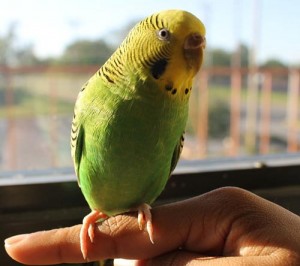 Our small birds love their time out of the cage. How do we know this? We know because sometimes it's soooo difficult to get them back in the cage. Plan for this by training your pet bird. Here are some tips to try for when you need to get your small bird back in the cage, now.
Lower Your Energy
Of course, whenever you are in a hurry to get to work or an appointment always seems to be the time when your bird decides to play keep-away with you as you try, in vain, to return her to the cage. Try these tips:
As you get more and more frantic, so will your bird. Remember, our small birds are flock animals, very observant of body language, and low on the food chain. To your bird, a flock member that is acting distressed and moving erratically could signal mortal danger.
Slow down, speak softly to your bird, and act as though you have all the time in the world to pick up your bird and take her back to the cage. This ranks up there with whispering to a screaming parrot to change behavior, as far as difficulty goes. But it works. Changeyour behavior in order to change your bird's behavior.
Time to Trim Wing Feathers?
Trimmed wing feathers grow out once or twice a year. As they grow in, you can decide once again whether to leave your bird fully flighted or to trim the feathers again. Work on the habits/behaviors listed below, and perhaps you can leave your bird flighted. Consider having just a couple of the flight feathers trimmed, which will slow your bird down but still allow her to fly. [Note: Don't let a wing-feather trim give you a false sense of security that your bird cannot fly away if startled when you go outside. Some bird species, like cockatiels, are efficient flyers and can gain flight lift-off even after a fairly recent wing-feather trim.]
Good Habits to Form
Start working on changing parts of your routine that make it easier to get your bird back in the cage. Make the cage a wonderful place to go back to for a special treat. Train your bird to go into the cage by responding to a cue or performing a trick to get there. And finally, keep practicing the "Up" cue, and learn how to hold your bird so you only have to retrieve her once, not repeatedly.
Holding Your Bird
Once you have asked your bird to calmly step up and she complied, gently hold her on your finger by pressing your thumb against the index finger on which your bird is perched. Make this a habit whenever you're holding your bird, starting with short amounts of time. This way, if you ever accidentally go out a door while holding your bird, you'll be holding her in a way in which she cannot fly off. This is how you get your bird across the room and into the cage without making repeated trips, every time she flies or jumps off.
Hands Over Back
Another way to get your bird into the cage once you have her in your hands, is to hold a hand lightly over the back and wings, which will prevent the bird from raising the wings to get away. This also takes some training before it is an action your bird accepts. Start by holding your hand over your bird, and as this becomes more comfortable, lower your hand and do so for longer periods of time until you work up to holding your hand over your bird's back for the half a minute it will take to get her back to the cage.
Huge Reward
One of the best ways to make going into the cage a great experience for your small bird is to have a favored food waiting for her in the cage. For our small birds, that might be a piece of spray millet or a Nutri-Berrie or piece of Avi-Cake.
Place the food in the cage, and then use both a hand signal and verbal signal to let your bird know it's there. For example, I tap the side or top of the cage and say "In the cage." Do this as you're putting your bird in. Do training step by step. Once your bird realizes that a tasty morsel waits inside when you say "In the cage," try saying that as your bird is perched on the door, then when she is on top of the cage or a short distance away. If your bird is away from the cage but reacts by leaning toward it when you say "In the cage," help your bird out by asking her to step up, and then take her to the cage.
"Elevator Up"
Keep your bird in top recall form by practicing the "Up" cue both onto a finger and a stick. This is especially easy to do if your bird jumps to the ground. Birds usually want to get up higher, so make that easy by repeatedly asking your bird to step up and lifting her higher each time. I suggest also stick training your bird. If your bird ever has to be handled by someone who is not comfortable with birds, stepping onto a stick offers is a way for them to hold your bird or put it back in its cage. If your bird tends to go through seasonal hormonal flare-ups, this saves your fingers too.
Up the Ladder
Acquire a long ladder, one that goes from the ground to the cage. A small bird will naturally head up a ladder if you place her at the bottom of one. Use a command like "Up the ladder," and give your bird a treat for accomplishing it. Once your bird does this regularly, then put her a few inches from the ladder and use your command. Then lengthen the distance. Eventually when your bird is away from the cage or flutters to the ground, you can say "Up the ladder" to get her back home.
The "Where Is My Bird" Hunt Is On …
Can't find your bird? There are certain places birds tend to flock to within the home. Look for your errant bird in these common birdie hangout locations:
Up high:
- Curtain rods
- Valences
- Lamps
- Mantels
- Tall furniture
- Ceiling Fans
- Picture Frames
Inside things:
- Under furniture
- Cupboards
- Drawers
- Open bag or box
- Laundry basket
- Plant
Danger!
- Dish tub
- Water glass
- Bathroom
- Through door
- Through window
- Pot on stove
- Seat of sofa or chair
Source: https://lafeber.com/pet-birds/tips-get-bird-back-cage/

Post a Comment for "My Bird Only Has Its Converts Will It Ever Fly Again"